
China proves that speed v/s depth is a myth
The ecosystem delivers through an adroit interplay of agility, specialisation and integration
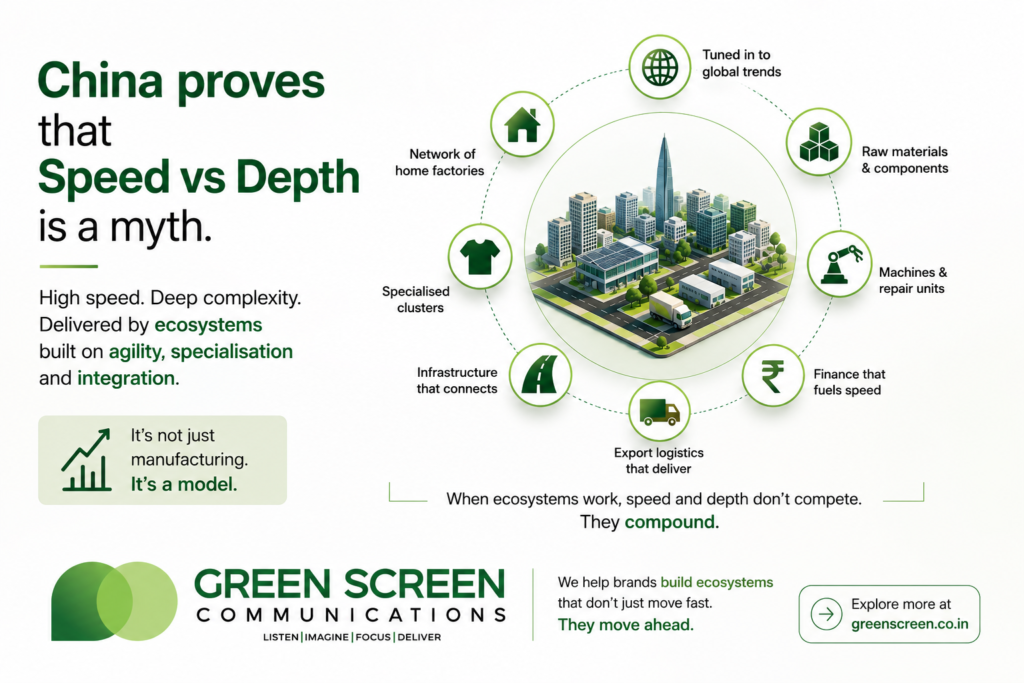
For years we have been fed the narrative that China’s success owes to:
– Centralised control over dissident opinion
– Sweatshops
– Deep subsidies
– Currency manipulation.
While there may be a grain of truth to this thought, the bigger picture is that China is able to achieve high speed while managing complexity through a self-reinforcing ecosystem. Let’s break it up.
Cities as ecosystems
As Eric Nie explains entire cities specialise in specific products. Garment, furniture, electronics, among a whole lot other products are built at scale in specific cities.
A city specialising in garment, is plugged into the global fashion trend landscape through Instagram or Tik Tok.
A hot emerging swimwear craze is detected in Miami. A US retailer needs quick supplies but is not yet confident of placing a big order.
A Chinese city has a solution. Trial batch orders for as low as 100 units can be executed in a home factory. If the demand picks up, 100 more home factories are activated to push out 10,000 units of the hottest trend in just a week.
The pilot risk is minimised as are inventory carrying cost and risk of obsolescence.
The secret sauce is of course the ecosystem comprising:
– A nerve centre tuned in global fashion trends
– A network of home factories
– Supplies of raw material
– Machines
– Repair units
– Finance
– Infrastructure
– Export logistics
The real competitive advantage
The same strategy can be applied to other products with different lifecycles and customer demographics.
Smart watches are supplied for 10th of the selling price in the West. Margins are wafer-thin. But volumes are humongous.
The manufacturing margins themselves may not be the endgame. Ubiquitous connected devices also create enormous strategic advantages in data, software and AI over the long term.
The Pivot
India can continue to blame democracy for slow progress. The West can continue to optimise for quality of life.
China isn’t waiting.
Businesses can learn faster than countries. They can create their own ecosystems – thinking creatively, honing proprietary strengths and by acting decisively.
Marketing and business development are not derivatives of this strategy. They are part of it.